Just over a week ago we heard quite a lot about what was “off the table” in any talks between the UK Government and NI
Executive.
Today, 7 September, the conversation moves back to Stormont as NI Secretary of State Sir Chris Bryant is set to hold talks over the budget stalemate, bringing the issue back into sharp focus.
We understand the budget pressures facing the Executive are real. We hear about them every day, particularly from our people. But the consequences of decisions about where funding goes, what gets prioritised and which commitments move from strategy into delivery are real too.
As the Executive returns from its summer recess, there will be plenty on the table.
Budgets. Public services. Healthcare. The economy. The pressures facing communities across Northern Ireland.
But as those conversations take place, there is one issue we believe needs to be a priority too. One that connects into each of these areas.
Mental health.
Not as an afterthought.
Not as something that sits within a wider health discussion and gets lost among competing priorities.
And, most importantly, not as a nice soundbite. Because nearly everyone we speak to agrees more needs to be done.
Because the need is there
The latest report from the Northern Ireland Mental Health Champion makes for sobering reading.
In 2024/25, 18% of adults in Northern Ireland recorded probable mental ill-health. In the most deprived communities, that figure rose to 24%.
Mental health and substance-use disorders account for almost one in ten of the total disease burden in Northern Ireland.
And the pressure on services is growing.
The Mental Health Champion’s report points to an estimated 30% increase in mental health waiting lists over the past four years, alongside significant workforce pressures, including around one in four consultant psychiatrist posts either vacant or covered by locums.
For children and young people, the picture is particularly concerning. The latest published CAMHS waiting-time figures showed that 52% were waiting longer than the nine-week target for their first mental health appointment.
Behind every one of those numbers is a person.
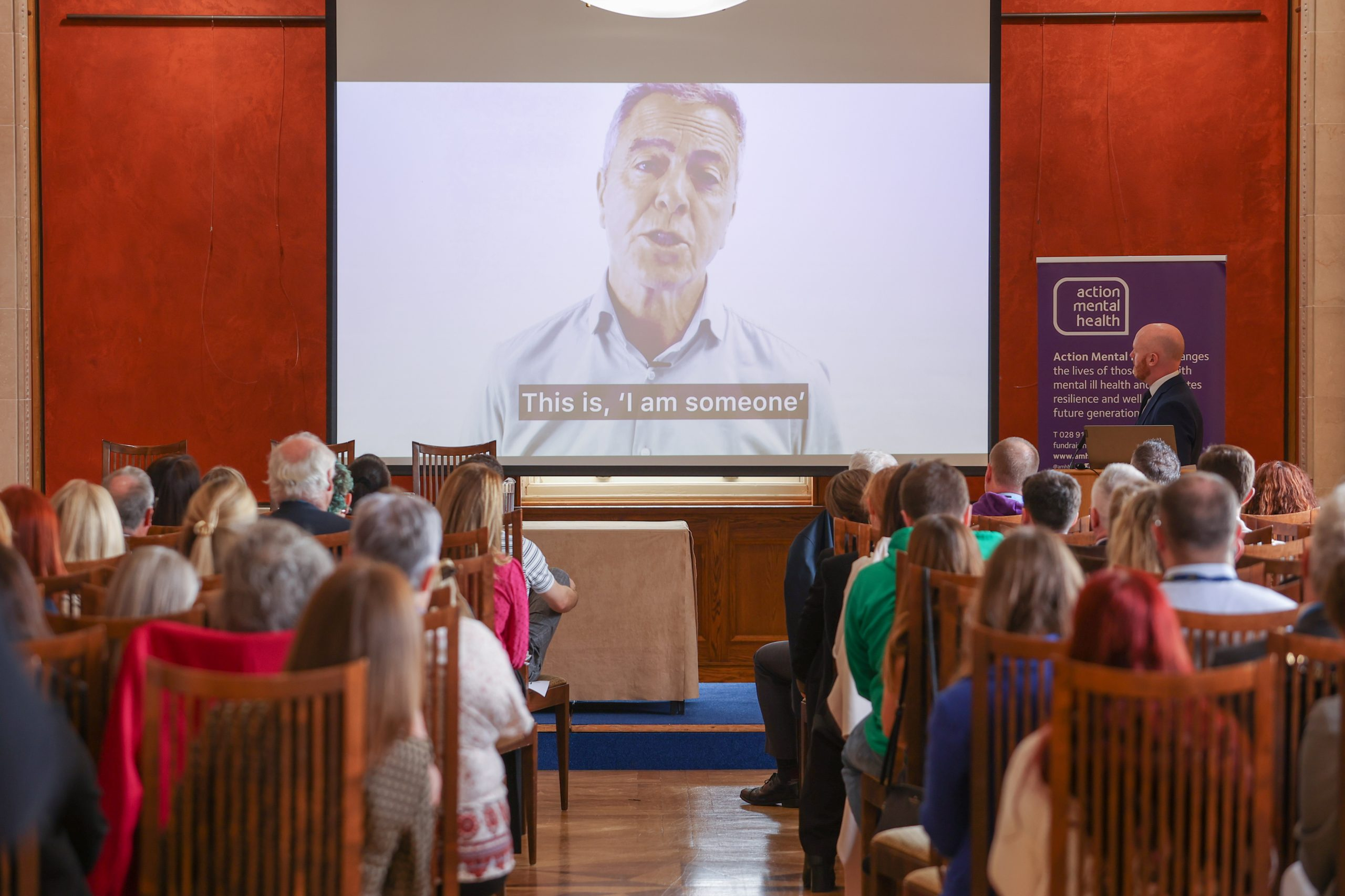
When we created our ‘I am someone’ campaign, we wanted to put those people at the centre of the conversation. Not just the person experiencing mental ill-health, but the people around them too.
We heard how one person’s life was given back to them, but also how their son’s life was given back.
That is what these statistics can sometimes hide.
Every day across our organisation, we see a child waiting for help, a parent wondering where to turn, someone whose mental health is deteriorating while they wait, a family trying to support someone they love, or someone desperate to get back into work after their own mental health has deteriorated.
These aren’t abstract statistics.
They are people, families and communities who need more.
And there is an economic cost too
Mental health is sometimes treated as though investing in it is an additional cost that Northern Ireland simply can’t afford.
The evidence suggests we should be asking the opposite question: Can Northern Ireland afford not to invest?
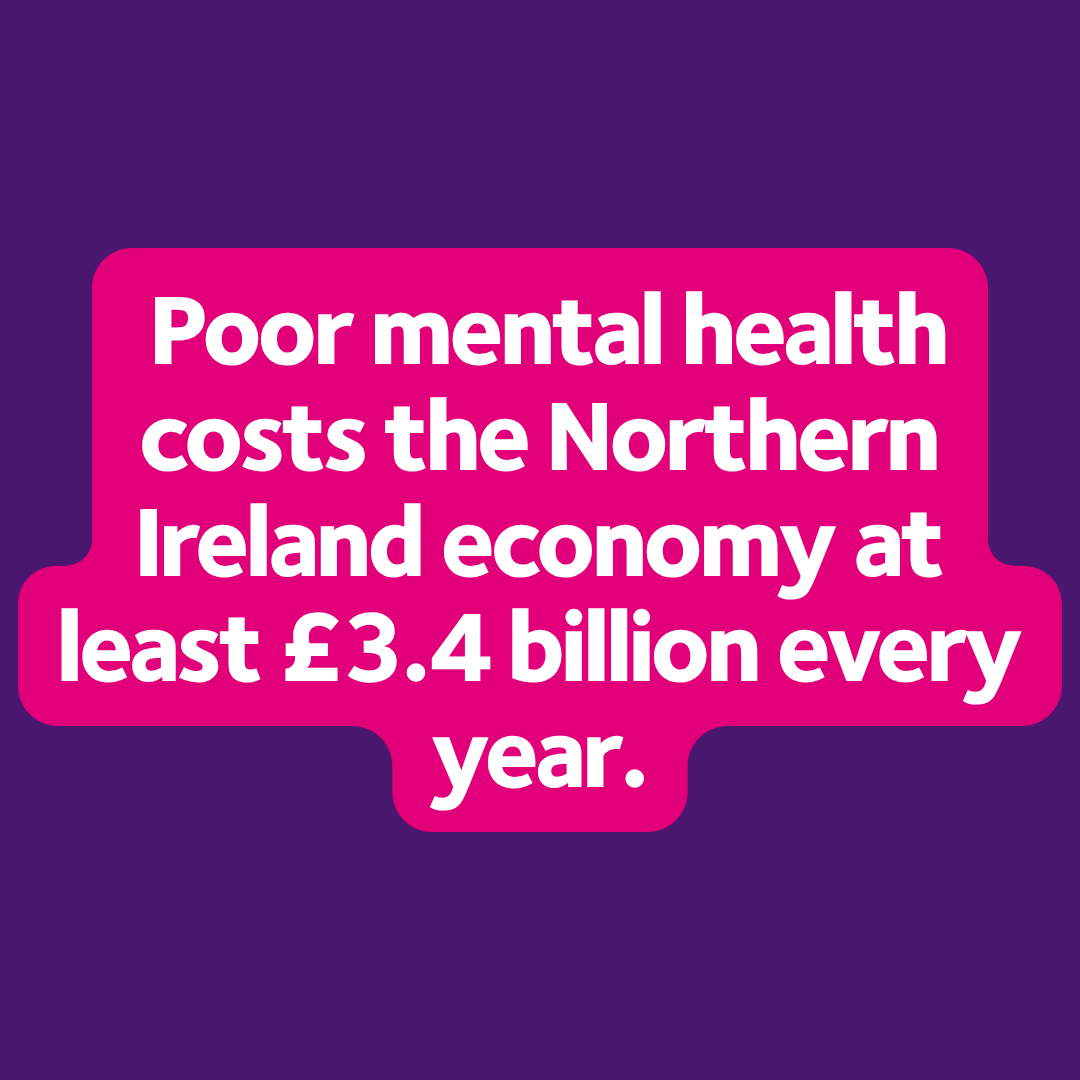
The latest Mental Health Champion evidence estimates that poor mental health costs the Northern Ireland economy at least £3.4 billion every year.
That figure includes the wider economic impact of poor mental health and is likely to be an underestimate.
There are costs to our health service, of course. But there are also costs through lost productivity, economic inactivity, unemployment, families and carers, emergency services and the longer-term consequences of people not receiving support early enough.
Mental health is therefore not just a health issue.
It is an economic issue. A workforce issue. A community issue. An education issue. A community issue. A justice issue.
We already have a strategy. We need to fund it.
Northern Ireland isn’t starting from scratch.
We have a Mental Health Strategy. It sets out an ambition for prevention, early intervention, better services and a more joined-up approach.
But ambition without investment is difficult to turn into reality.
The Strategy was estimated to require around £1.2 billion to deliver.
Yet by the end of 2024/25, just £12.3 million had been allocated to 14 of its actions — only 16% of the funding assessed as necessary for that period.
That isn’t simply a line in a budget document.
It is a question about whether the commitments we make to people are actually being delivered.
Recent experience across Northern Ireland should make us cautious.
The NI Can’t Wait campaign led by NICVA highlighted what happens when funding decisions are delayed and uncertainty becomes the norm for community organisations.
Services become stretched.
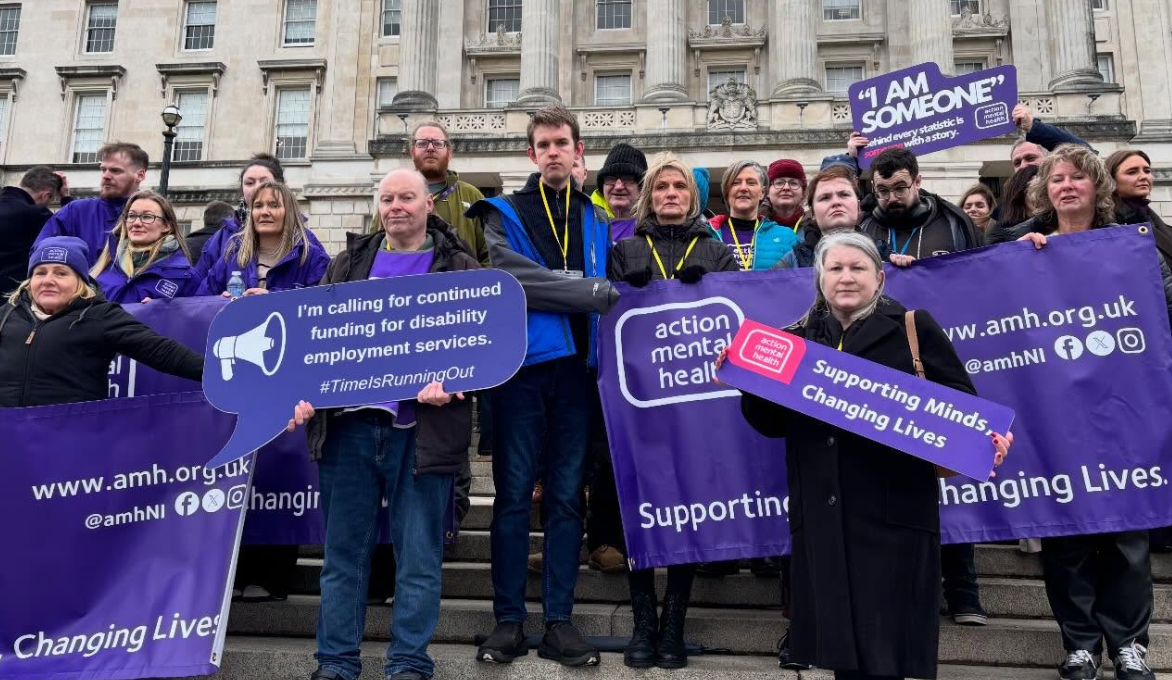
Organisations, including ours, have to make difficult choices.
People who rely on those services are left wondering whether the support they depend on will still be there.
We shouldn’t repeat that with mental health.
Northern Ireland can’t wait
The voluntary and community sector has an enormous role to play in mental health.
Every day, organisations across Northern Ireland provide early intervention, work in communities, support families and reach people who may not engage with statutory services.
But if we genuinely want to move towards prevention and early intervention, we need more than recognition.
We need sustainable investment.
So, what’s on the table today?
We understand that the Executive has difficult decisions to make.
We understand that there are competing priorities and significant financial pressures.
But that is precisely why mental health needs to be part of today’s conversation.
Because Northern Ireland is not starting from the same place as other parts of the UK.
We have higher levels of mental ill-health, significant deprivation and the lasting impact of the Troubles. The Northern Ireland Audit Office has previously highlighted that the prevalence of mental health problems here is around 25% higher than in England, with the difference linked in part to deprivation and the legacy of conflict.
So when we look across the Irish Sea, the question isn’t simply what England is doing differently.
It is this: If England recognises the need to invest in mental health, despite having lower levels of need, why shouldn’t Northern Ireland expect at least the same level of ambition?
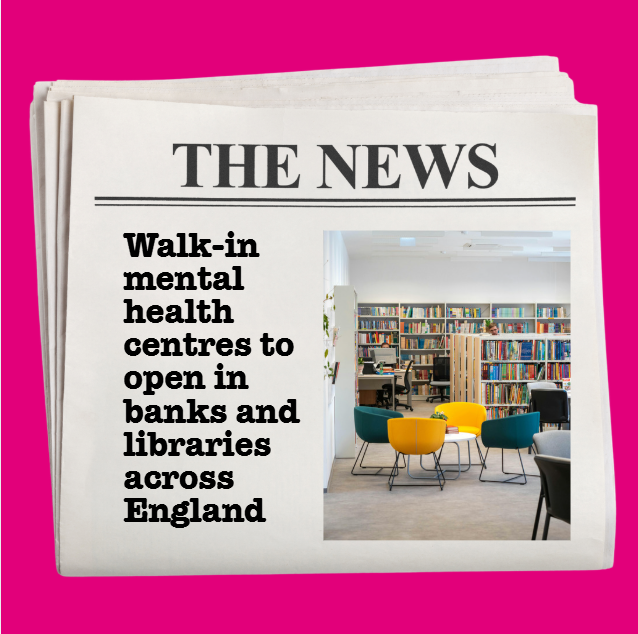
Just last month, the UK Government announced plans for up to 159 new NHS mental health centres across England, backed by £343 million of investment. The aim is to provide support closer to home, intervene earlier and ensure people in crisis can access specialist care outside A&E.
That announcement matters to Northern Ireland too.
Not because we should simply copy England.
But because it raises a fundamental question about what we are prepared to invest in here.
If Northern Ireland has greater levels of mental health need, then surely our response should reflect that.
We need to see mental health treated as a priority across government, not simply as another pressure within an already stretched health service.
We need prevention to sit alongside crisis response.
We need community organisations to be treated as essential partners.
We need the Mental Health Strategy funded to match its ambition.
And we need people with lived experience to be at the centre of decisions about the services they use.
This isn’t an argument for mental health at the expense of everything else.
It is an argument for recognising that mental health is part of everything else.
It affects our Health Care System.
It affects our economy and workforce.
It affects education, families and communities.
And it affects the ability of people to live healthy, fulfilling lives.
So, as the Executive returns today and the conversations begin again, we have a simple hope.
Last week, we heard about what was off the table.
Today, we want to hear about what is on it.
And for us, mental health needs to be there. Not because it is an easy issue.
Not because there isn’t pressure elsewhere. But because the level of need demands it.
Northern Ireland can’t afford to wait for mental health to become a priority.
And neither can the people who need support.