Eating Disorders Awareness Week reminds us that no one should have to face an eating disorder alone.
This year, EDAW runs from 23 February – 1 March, focusing on the theme of community. That is, the relationships, support networks, and small acts of connection that can make a meaningful difference in someone’s recovery journey.
An estimated 1.25 million people in the UK have an eating disorder1. Millions more family members, friends and wider support networks are also impacted.
An eating disorder is a complex mental health condition which essentially involves someone using food as an emotional tool.
People with an eating disorder control food and their body as a way of relieving distress or managing their emotions, while achieving some degree of control over their life. Their eating disorder subsequently provides them with a sense of safety.
Eating Disorders are not a choice or a phase, but rather complex coping mechanisms. They can affect anyone of any age, gender, shape or size, or background. But due to the stigma around eating disorders, it can be difficult for some people to seek help.

Eating disorders often lead people to withdraw, avoid social situations, or hide their struggles out of shame or fear of being judged. Isolation is one of the symptoms families may notice first, as loved ones may become quieter, less engaged, or pull away from hobbies and connections they once enjoyed.
Having someone who listens without judgement, validates emotions, and gently encourages professional support can be life‑changing for someone living with an eating disorder.
Beginning a conversation can feel daunting, but talking openly helps to reduce the stigma around eating disorders.
Early intervention gives people the greatest chance of full recovery. So, the more we raise awareness of eating disorders as a community, the more normalised it becomes to reach out for support.
Recovery affects the whole family. Carers often want to help but may feel unsure about what to do or how to approach difficult moments. So, building an informed and understanding community, where family and friends are also supported, means their loved one benefits too.
Action Mental Health’s Guide to supporting a loved one has further information and support for carers.

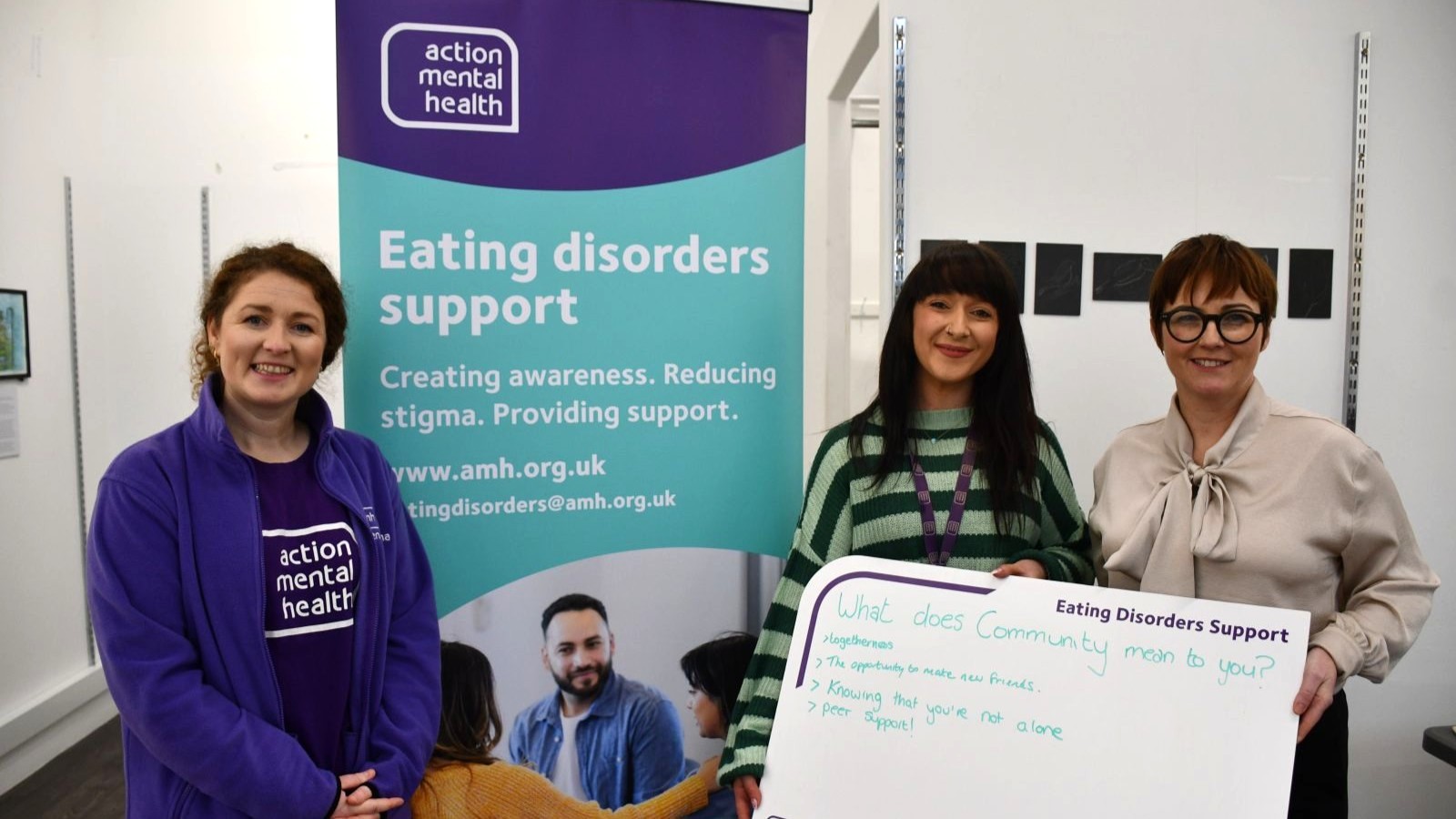
Our Eating Disorders Support service works across the Southern Health and Social Care Trust area to provide specialist support for adults aged 18+ and carers of anyone affected by eating disorders.
Our approach is rooted in recovery through partnership. This means we work closely with the person, their family and the SHSCT Eating Disorder Team to ensure more comprehensive, personalised support towards recovery.
When someone seeks help, we’re there from the beginning to bridge the gap from seeking treatment and receiving it. We remain with the client and their family, until they access treatment via the SHSCT Eating Disorder Team, and offer support when the time comes for discharge.
Additionally, we offer support at a community level for those who don’t avail of a service from the SHSCT Eating Disorder Team.
We also deliver workshops to healthcare professionals, schools and community groups to raise awareness of eating disorders and signpost to support services.
“You don’t have to do it all on your own, when you get support you’ll learn how to cope in a better way and it will open all sorts of doors in life you never thought were possible. Recovery is worth it.”
Client supported by our service
“Remember to be kind to yourself too. Eating Disorders affect the whole family. You should all be proud of yourselves for all you do to help your child.”
Carer who attends our monthly carers support group
You don’t have to be an expert to make a difference. Here are simple ways to support someone:
Let them express their feelings at their own pace. Reassuring them that their feelings are valid goes a long way.
Instead, focus on qualities, strengths, and shared experiences that reinforce self‑worth beyond appearance.
Supportive phrases like “I’m here for you”, “You deserve support”, and “This doesn’t define who you are” can help counter shame and fear.
Things like journalling and grounding techniques can be powerful tools during difficult days.
You could also share our Guide to self-caring with an eating disorder.
If you’re supporting someone, your wellbeing matters too. Caring for yourself helps you offer steadier, calmer support.

If you’re worried about your relationship with food, your body, or exercise, or you’re concerned about someone you love, help is available.
You don’t have to wait until things feel “bad enough” to deserve support. Your feelings are always valid, and reaching out as early as possible is a really positive step.
Recovery from an eating disorder is possible. This Eating Disorders Awareness Week, we’re encouraging everyone to help build a compassionate and understanding community for those affected by eating disorders.
Visit our library of resources to find out more.
1 Beat, 2026. https://www.beateatingdisorders.org.uk/get-information-and-support/about-eating-disorders/how-many-people-eating-disorder-uk/