With so much uncertainty in the world at the moment, it’s easy to feel overwhelmed by fear and anxiety. It’s important now more than ever, to look after your own and your employee’s mental health and well-being. We understand the new pressures organisations are facing and AMH Works are here to support you in any way we can over the coming weeks. Below are some helpful guides that we have developed with tips and advice to help you stress less and promote a greater sense of peace and control, feel free to share these with your colleagues.
We are also currently developing bite-sized sessions to deliver to participants online via Zoom, such as ‘Building Resilience in Uncertain Times’ which will teach employers and employees the best methods and techniques to better equip themselves to stand up to pressures and stresses of life. If you are interested in online sessions for your organisation please contact AMH Works Manager, Shelly Wilson on [email protected] or 07540 124083.
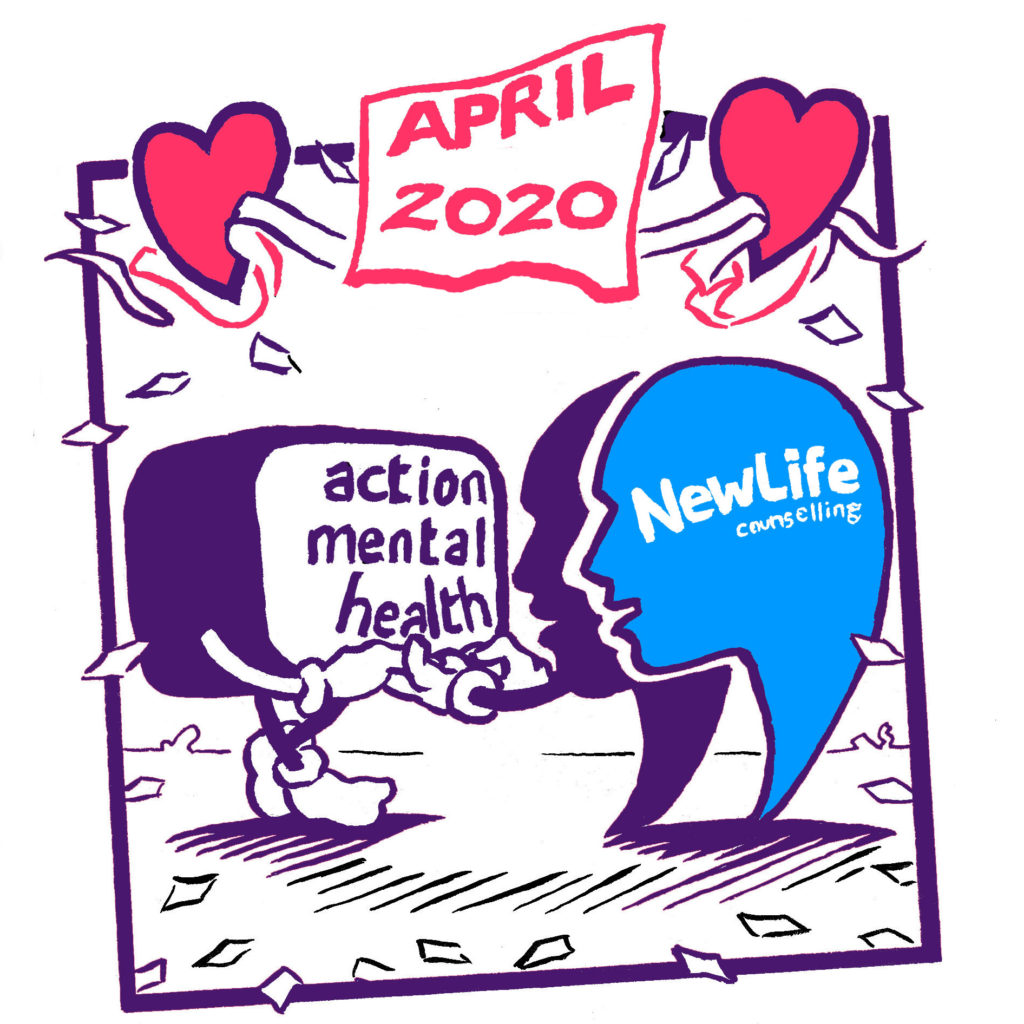
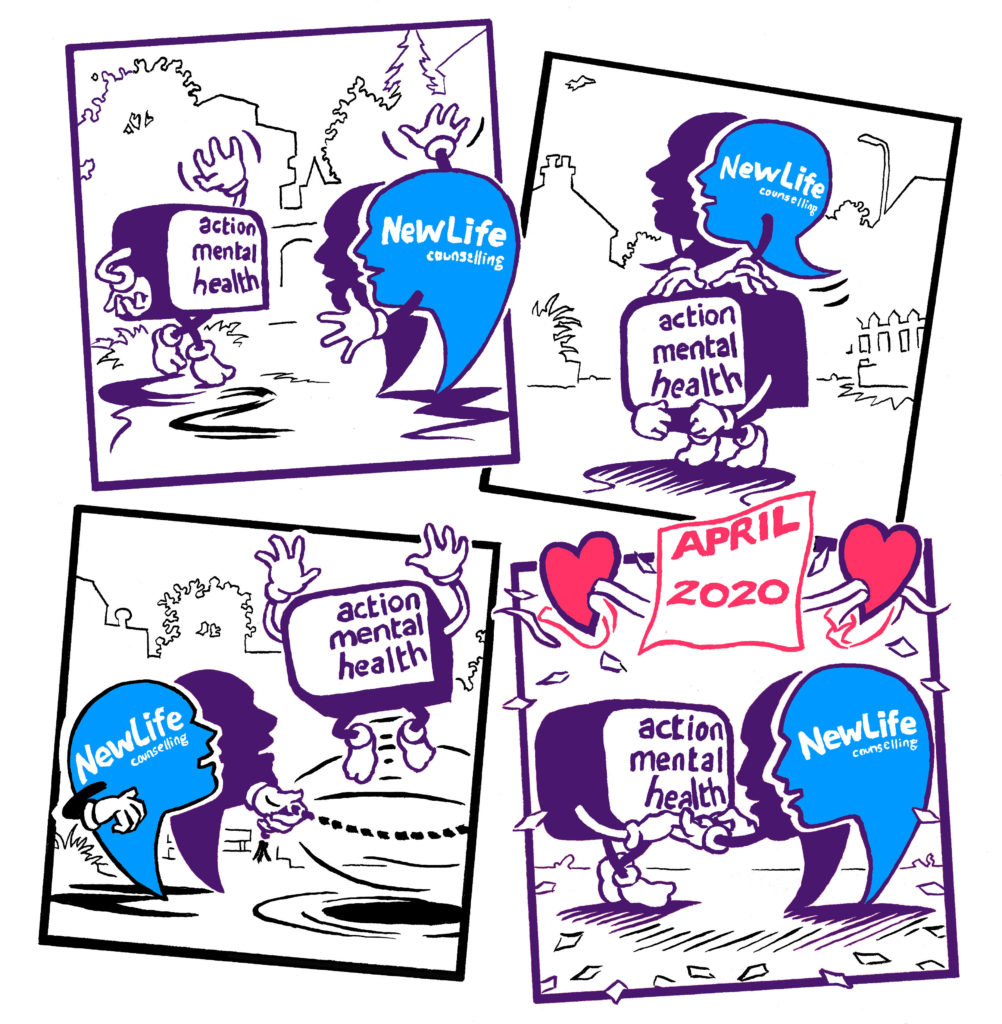
Action Mental Health is delighted to announce that its merger with New Life Counselling takes effect today.
This welcome news is recognition by the Boards of AMH and NLC that by combining resources, services and expertise, there is a better chance of developing and sustaining mental health support for our communities in these challenging times. Going forward, the AMH Board is determined to tackle the disparity of support between physical and mental health services and this development is a mark of its commitment to ‘Taking Action on Mental Health’.
The new partnership takes full effect from today, April 1st, 2020, which means the two charities are now totally integrated. Whilst we are living through an unprecedented period, face to face services based at our usual locations have unfortunately been temporarily interrupted, however great efforts are now in place to continue to offer support to clients in a range of new ways. In future, once the effects of isolation and social distancing come to an end, all services will return to normal. The NLC service will, with a refreshed brand, retain its name, which is well known and recognisable to local communities, clients and professionals.
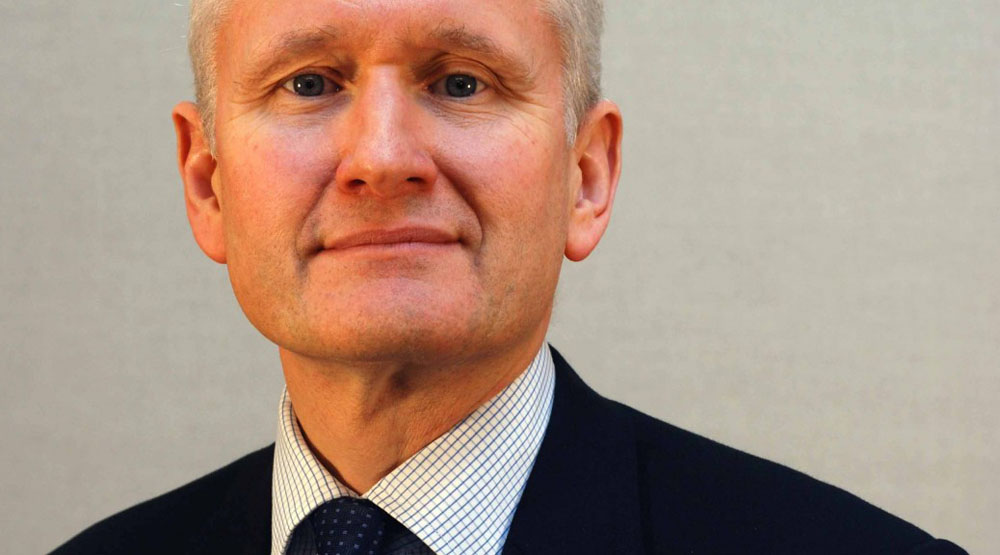
David Babington, Chief
Executive of Action Mental Health, said:
“The Boards of Action Mental
Health and New Life Counselling know there is a real need for quality
counselling across Northern Ireland. By combining forces, there is a greater
opportunity to provide the best possible outcomes for our clients regionally,
provide greater staff security and maximise scarce resources.
“By combining AMH with such a
recognisable and trusted brand we are confident that NLC will be able to
develop and grow their service and reach even more communities across the
region. There is a really good mix between the two organisations and existing
services complement each other. Most importantly, there is a great
similarity in terms of ethos, values and commitment to best practice.
“The current unprecedented environment is really challenging and I believe that it provides even further evidence that the merger is the best way of ensuring we continue to provide quality support to the people using all of our services. Action Mental Health is a charity focused on ‘Taking Action on Mental Health’ and we remain committed to keeping the people we support at the heart of everything we do.”
Our team at AMH everyBODY (AMH’s eating disorder service in the Southern Trust area) are still here for our clients and have devised a series of Coping Statements to help during this very uncertain and difficult time.
Coping
Statements to deal with heightened Anxiety
This is an opportunity to get to know, and accept your body at rest.
It’s okay if eating and moving is different right now, because life and routine is different right now. What’s the same? You still need to eat regular meals and snacks, movement is meant to feel good, you’re allowed rest and food does not have moral value.
Now is a good time to practice self-compassion as it is normal to have heightened emotions.
You need adequate food throughout the day even if you do not leave the house.
Eating and exercise do not require compensation, they are two separate things that we do for our body, not against our bodies.
Resting is healthy, an act of self-care, healing and relaxing is needed for all of us. You can choose to rest without explanation.
We may be in a time of uncertainty, but the one thing we have in common is that we are all in the same boat together.
Like any situation in life, whilst it may feel difficult now it will pass. We will heal and we will come through this.
I have survived all of my toughest days so far, I can get through this too.
We always have choice no matter what the situation is, sometimes new choices lead us to new opportunities and strengths we didn’t know we had.
Eating is an essential need to keep me alive and well, it will help support my immune system and give me the energy to recover if I was to be unwell.
Undereating increases anxiety and lowers your ability to think clearly.
I have permission to rest. Health is multifaceted, the ability to slow down and rest is not lazy, it gives us time to heal and grow and recover.
Nourishment and rest will keep my immune system strong.
All my feelings are valid right now, my feelings matter. “I accept that I am feeling anxious right now and that is ok”
Health is not just what you’re eating and how you move your body. It’s also about what you’re thinking and saying.
The mark that you leave on the world is far more important than any number on a scale could ever tell you. You are so much more than your eating disorder would have you believe.
I still need to eat even if I’m not leaving the house, my body is still working hard for me when I’m sitting still. My heart is still beating, my brain and body need still need glucose and energy.
Dealing with stress and anxiety is exhausting, it is understandable if I need more time to rest.
Calories are life giving energy, not something to be feared.
Even if I’m struggling with my body image I still need to eat. There is no body size where you become unworthy of food.
Some strengths are only realised in times of uncertainty.
Now, more than ever we want to remind you that you are not alone. AMH everyBODY, Action Mental Health’s eating disorder service, in the Southern Trust area, has had to adapt to these unprecedented times, but we are still here – we are still listening and we’re still here to offer you support. Please reach out if you need to. Contact – [email protected] or 077 9088 5438.
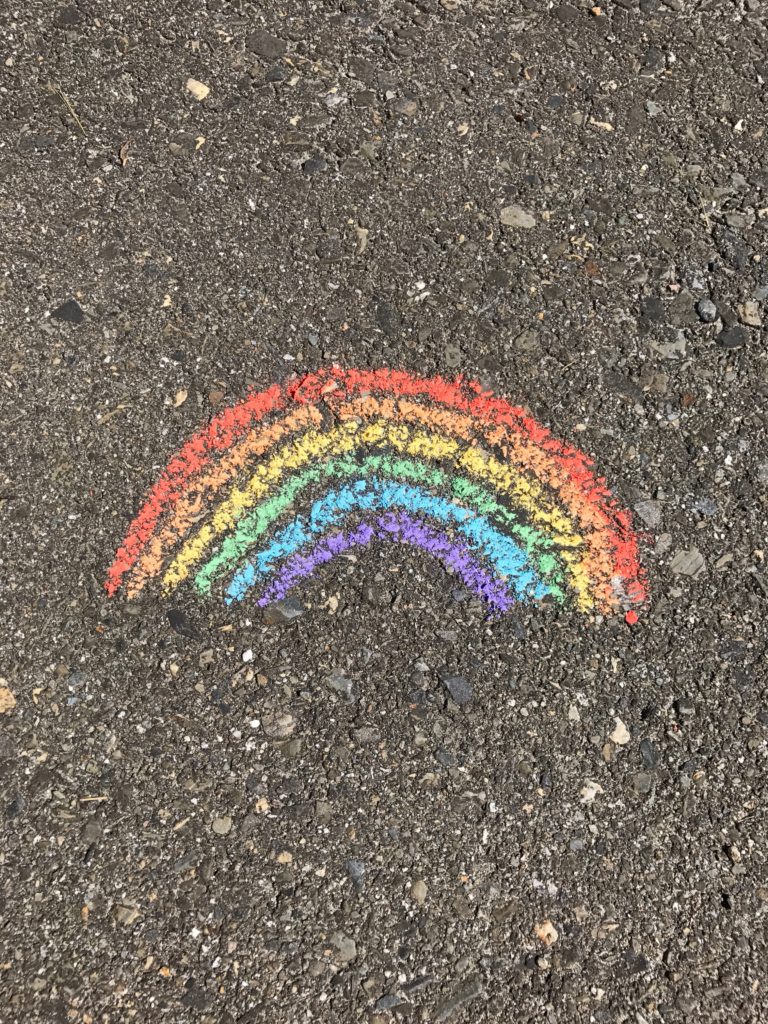
AMH Promote – Action Mental Health’s service for adults with learning – is joining the global effort to brighten up our lives during the coronavirus pandemic.
The clients at the Bangor based
service will be creating colourful rainbows to display in their windows, as over
100,000 budding young artists of all abilities across the world put their own
artistic touches to the welcome colourful arcs in the sky.
The trend, thought to have originated
in Italy, among one of the worst hit countries by Covid-19, has now reached the
Promote gang in Bangor. It gathered momentum in the UK and Ireland following
the recent closure of schools, following the example of rainbow makers around
the world who are uniting on a Facebook page Believe
In Rainbows, People are using the social media platform to share their
versions of the symbol in a bid to spread a bit of joy amid the pandemic.
Paintings and coloured pictures of
rainbows produced so far carry messages of hope and some even reflect the
Government’s message on the spread of coronavirus: “Catch it, bin it, kill it”.
Other messages have been found encouraging others to “Be kind,” “Stay Safe” and
“Be positive”.
AMH Promote – Action Mental Health’s service for adults with learning – is joining the global effort to brighten up our lives during the coronavirus pandemic.
The clients at the Bangor based
service will be creating colourful rainbows to display in their windows, as
countless numbers of budding young artists of all abilities are painting and
drawing across the world.
The trend, thought to have originated
in Italy, which is among the first country to suffer the crippling effects of
Covid-19, has now reached the Promote gang in Bangor. It gathered momentum in
the UK and Ireland following the recent closure of schools.
Paintings and coloured pictures of
rainbows carry messages like reflecting the Government’s message on the spread
of coronavirus: “Catch it, bin it, kill it” as well as other messages urging
people to “Be kind,” “Stay Safe” and “Be positive”.
Rainbow makers around the world are uniting on a Facebook page Believe In Rainbows, sharing their versions of the symbol in a bid to spread a bit of joy amid the pandemic.
The brave workers of the NHS have been under incredible
strain since the onset of the coronavirus pandemic.
This large band of key workers are doing extra hours, often in highly pressured environments, coupled with new social distancing restrictions. In response, our friends at Mental Health UK have compiled this helpful information which might help to lessen the burden of their physical work on their mental health.
The effects
of the coronavirus pandemic have become a physical reality for Northern
Ireland, sending us indoors for an indeterminate period.
However, as
we isolate ourselves and exercise social-distancing from others when we head to
the shops for necessities, it’s vital we don’t allow Covid-19 to burden our
mental health with excessive worry, fear and anxiety.
Northern
Ireland society, like the rest of the UK, now finds itself at the beginning of
an unprecedented experience, one that few among us could have ever envisaged.
Some may be viewing it as a welcome retreat from the hectic rush of modern
life, but many may be fearful of the enforced isolation it now presents.
For people living with mental health issues, the stress and anxiety this
‘new normal’ heralds, may be exacerbated by the prospect of losing contact with
people they depend upon. It is well established that many people living with
anxiety have less tolerance to uncertainty, and in the current situation, it’s
understandable that some people may feel overwhelmed and begin to catastrophise
– and imagine the worst case scenario.
However, coming, as Covid-19 does, in an era of a 24/7 online world, there
is a whole raft of networks, advice and virtual assistance to turn to for
support (see bottom). But while help is there, it can all become too much at
times, so why not adopt some of the following tips to help you cope.
MUTE
If
you’re feeling overwhelmed by the barrage of Covid-19 on social media, news and
chat groups, it may be time to press ‘mute’.
Try to limit your exposure to news sources which
are covering the coronavirus issue as this only serves to feed fear;
Ensure that you have some mental ‘downtime’ woven
into your daily schedule;
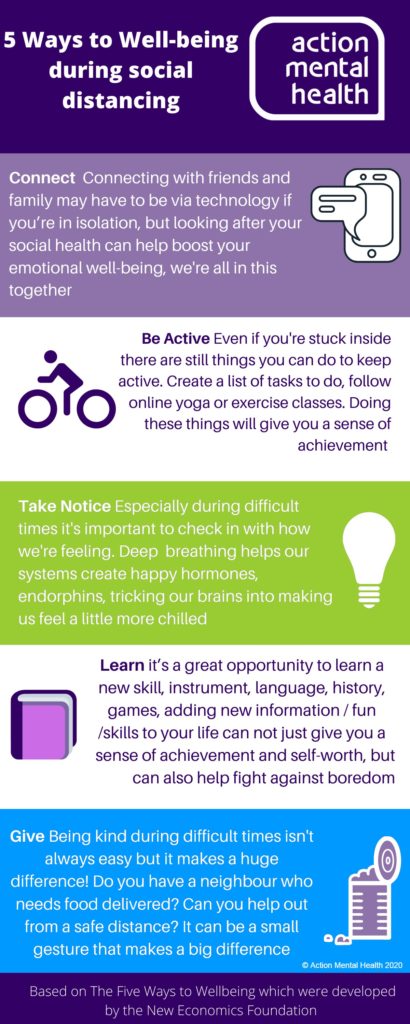
Embrace the Five Ways to Well-Being:
Connect – even if you
can’t physically be with your friends and loved ones, connect with them via
phone, email, Skype, Facetime – whatever way you choose;
Be Active – exercise may be
limited at the moment, but it makes us feel good and we can still go for a walk
– while keeping a distance of two metres – between yourself and other people;
make your home your gym by following an online video or make up a circuit of
exercise in your garden;
Take Notice – this tip
advocates stopping and pausing or take a moment to look around you now and take
notice of the beautiful, new, unusual or extraordinary things in your everyday
life. Even if your options are limited at the moment, there’ll be something to
notice;
Keep Learning – these troubling
times might be the perfect opportunity for you to learn a new thing, while
you’re prevented from carrying on your day-to-day routine. You can access
countless ‘how to’ videos online these days so why not learn a new craft or
hobby, a new instrument or even a new language;
Give – The opportunity to give to others may
be limited at the moment however, you could help an elderly neighbour in
self-isolation by buying them groceries or offering to walk their dog, while
still following the official hygiene advice on preventing the spread of
Covid-19.
Anxiety
UK promotes the APPLE technique which
encourages us to Acknowledge, Pause,
Pull back, Let go and Explore:
Acknowledge – Notice and acknowledge
the uncertainty as it comes to mind.
Pause – Don’t react
as you normally do. Don’t react at all. Just pause and breath.
Pull back – Tell
yourself this is just the worry talking, and this apparent need for certainty
is not helpful and not necessary. It is only a thought or feeling. Don’t
believe everything you think. Thoughts are not statements or facts.
Let go – Let go of
the thought or feeling. It will pass. You don’t have to respond to them. You
might imagine them floating away in a bubble or cloud.
Explore – Explore the
present moment, because right now, in this moment, all is well. Notice your
breathing and the sensations of your breathing. Notice the ground beneath you.
Look around and notice what you see, what you hear, what you can touch, what
you can smell. Right now. Then shift your focus of attention to something else
– on what you need to do, on what you were doing before you noticed the worry,
or do something else – mindfully with your full attention.
We’ve gathered up a list of sources of support you might find useful to help safeguard your mental health during these unsettling times:
A HELPING HAND
Government: Keep up to date with the latest advice and
support from the government. It’s important to use trustworthy sources.
Many thanks to Hugh from AMH MensSana who has put together some ideas of how the “5 Ways to Well-being” can help during this time of social distancing. Download our infographic to stick on your fridge!
A message from our Chief Executive, David Babington
As everyone will be aware, the situation our society faces at present with Covid-19, is unprecedented.
Action Mental Health is first
and foremost, committed to continuing to support the mental health and
well-being of our clients and the staff who are there for them. We are
continuing to monitor and adhere to all Public Health Agency guidance.
Given the rapidly changing picture and latest Government advice, we want to reassure all clients and service users that we are at present focusing all our efforts on developing new ways of working that will allow us to continue providing services in the coming days and weeks. In the meantime, we have had to make the decision to close all Action Mental Health sites for face-to-face contact from today – Monday 23rd March 2020, until further notice.
This decision has not been taken lightly, however we feel this is now the only course of action available that will allow us to protect the health and safety of everyone concerned. These changes will apply to all of Action Mental Health’s services across Northern Ireland. We plan to move to remote working to ensure services are maintained for those who need us.
All clients are being contacted to
advise them on how we will be supporting them in the coming period.
We will also continue to keep
everyone updated on our website, social media channels and through our range of
local services.
Whatever happens and no matter how our service delivery changes in the coming days, our commitment will not change – we will be supporting our clients wherever they are, in AMH facilities, in their home and across our local communities.
I would like to say a huge and heartfelt thanks to you, for your ongoing support, patience and understanding during this time. I would also like to pay tribute to my AMH colleagues, who are working hard to ensure our work continues in these uncertain times. Their dedication and commitment to our clients, is clearer today than it’s ever been.